Most drivers immediately recognize the numbers on a manual gear shift and know that “R” means reverse. But some older cars included another marking that can leave modern drivers confused: the letter E. On certain older manual transmissions, particularly Volkswagen models from the late 1970s and 1980s, E referred to an efficiency-focused overdrive gear. It was essentially a very tall final gear designed to keep the engine turning more slowly while the car maintained cruising speed.
Many people simply call it an “Economy” gear because saving fuel was its main purpose. Volkswagen documentation, however, used the idea of Efficiency for these 3+E and 4+E gearboxes. Once the car reached a suitable speed, the driver could shift into E and reduce engine RPM. Lower revs meant the engine could use less fuel, make less noise, and experience less wear during long periods of steady driving.
The important thing is that E was not intended for quick acceleration or climbing a steep hill. Because the gearing was so tall, pressing the accelerator hard while remaining in E would not provide the same response as a lower gear. Drivers were expected to downshift when they needed more power, then return to E once they were cruising again. In that sense, it worked much like the highest overdrive gears found in later five- and six-speed manual transmissions.
The feature eventually disappeared as engines, transmissions, fuel injection, and vehicle electronics became more efficient. Modern cars can achieve similar or better fuel savings without labeling one gear separately as E. That is why many younger drivers have never encountered the symbol at all. What looks mysterious today was actually a clever mechanical solution to a problem manufacturers were taking very seriously decades ago: how to travel at highway speeds while burning less fuel.
Almost every bath towel has them: one or more flat woven bands running across the fabric near the shorter ends. Most people assume they are simply decorative,…
Pyrex bakeware is designed to handle normal oven temperatures, but “heat resistant” does not mean completely immune to breaking. One of the biggest dangers to glass cookware…
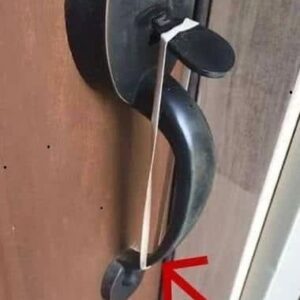
A rubber band stretched around a front door handle can look surprisingly suspicious, especially when it appears without explanation. Viral posts sometimes claim that burglars or other…
Seeing someone smear Vicks VapoRub around a front door may seem strange, but the idea usually has nothing to do with colds. The old household trick is…
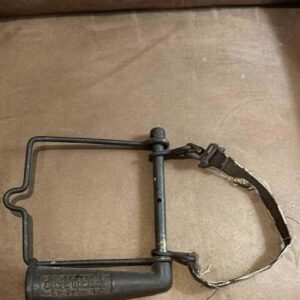
At first glance, this old metal contraption looks almost impossible to identify. The rectangular frame, worn leather strap, and funnel-shaped section could easily make someone think it…