Those little metal “buttons” on your jeans aren’t there just for decoration. They’re actually called rivets, and they were added to solve a very practical problem: early work pants kept tearing at the pockets.
Back in the 1800s, miners, railroad workers, and laborers needed clothing that could survive heavy use. The corners of pockets and other stress points were especially vulnerable because they were constantly being pulled and stretched. A tailor named Jacob Davis came up with the idea of reinforcing those weak areas with small metal rivets. He later partnered with Levi Strauss, and the riveted blue jean became famous.
That’s why you’ll usually see rivets placed around the front pockets and near the small coin pocket. They help hold multiple layers of denim together and reduce the chance of seams ripping when pockets are filled with keys, tools, coins, or other heavy objects.
Modern denim is stronger and manufacturing methods have improved, so jeans don’t always need as many rivets as they once did. Some brands even use reinforced stitching instead. But the metal rivet became such an iconic part of blue-jean design that manufacturers continue using it today.
There’s also a reason you usually don’t see exposed rivets on the back pockets anymore. Historically, they could scratch wooden chairs and saddles, so manufacturers eventually began covering or removing them from certain areas.
So those tiny metal pieces aren’t random decorations at all.
They’re a leftover piece of workwear engineering that helped turn jeans into some of the toughest everyday clothing ever made.
Those viral tricks claiming toothpaste, baking soda, or household polish can magically remove scratches from eyeglasses sound convenient, but they can actually make the problem worse. Most…
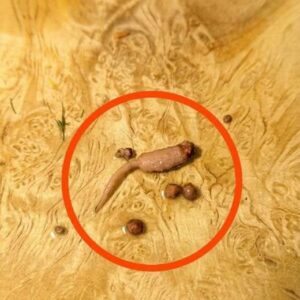
Finding something unfamiliar in cooked ground beef can be disturbing, especially when it looks completely different from the surrounding meat. In this photo, the object appears more…
Behind her dresser, I found an old cardboard box filled with letters, medical papers, and one tiny photograph of a baby I didn’t recognize. On top was…